Harder on Winnipeg Roofs
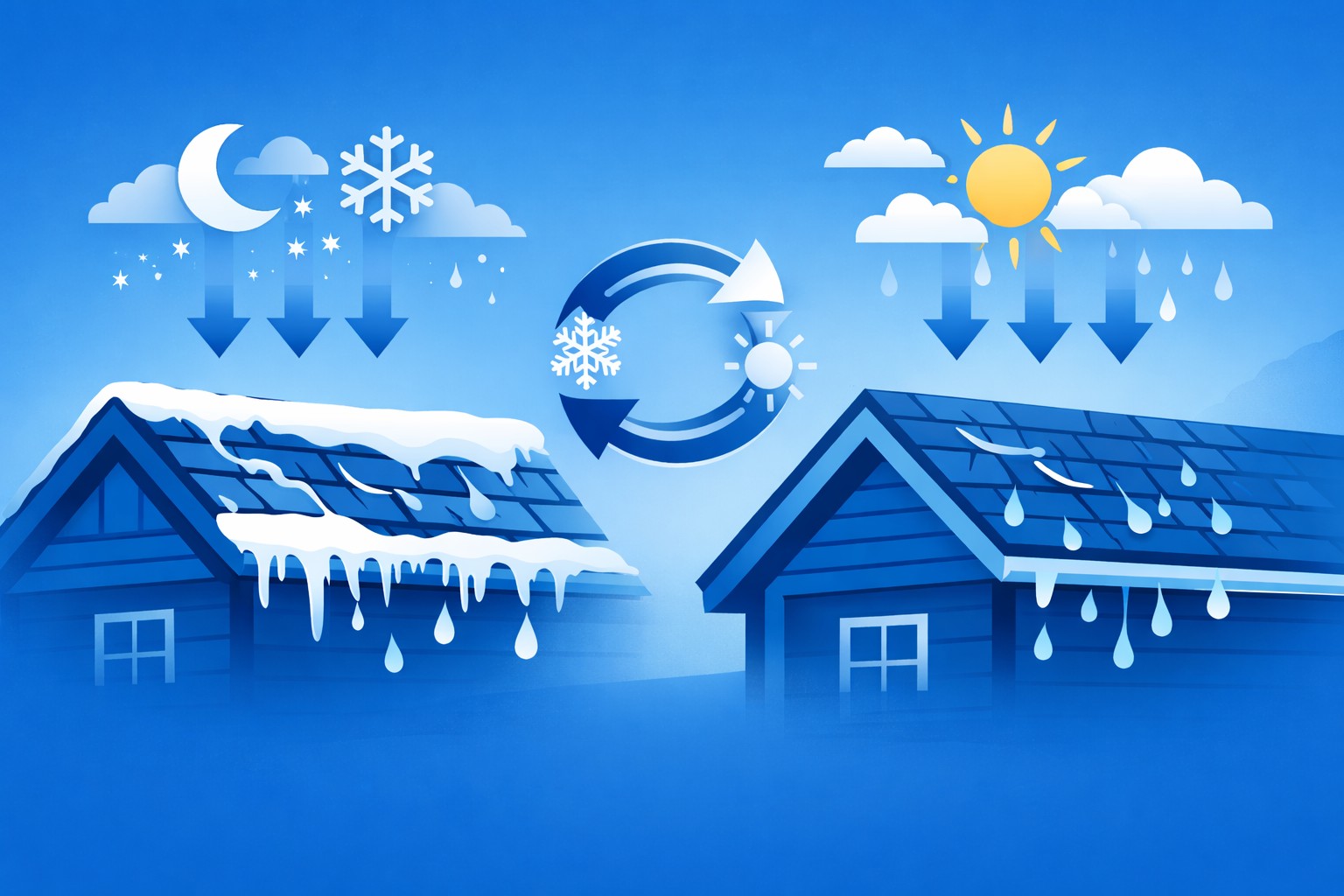
Winnipeg roofs are built to endure cold winters and heavy snow, protecting our most valuable possessions. However, the greatest threat to a roof healthy and functional state isn’t actually the steady cold; it’s the repeated freeze thaw cycle. This occurs when temperatures rise above 0°C during the day and then plunge during cold overnight temperatures.
In our climate, these thaw cycles can appear in early winter, then return relentlessly through warmer springtime months. Each time the freeze thaw cycle repeats, melting snow creates melting water that can work into roofing materials and possibly lead to roof damage. When falling temperatures return, that water freezes, expands, and creates pressure in tiny cracks. That ongoing freeze thaw movement puts undue stress on the entire roofing system; from asphalt shingles and flashing to the roof deck.
How Freeze–Thaw Cycles Stress a Roof
A seasonal freeze thaw cycle doesn’t just affect the roof surface. When snow melts, the resulting water runoff doesn’t always end up draining properly; especially if gutters are clogged or get wrench gutters-style knocked out of alignment by heavy ice.
When sunny days dropping into freezing nights occur, moisture can sneak into:
- Tiny cracks in asphalt shingles or sealant.
- Flashing seams and vents gaps.
- Edges of the roof and vulnerable eaves.
- The area where the roof deck meets the siding.
When the temperature drops, that trapped melting water becomes ice. That expansion pressure can loosen seals, gradually worsening existing weak points. If a roof already has existing roofing issues; such as a unevenly spaced shingles layout or missing shingles; the freeze thaw movement will aggravate existing roofing issues, leading to freeze thaw damage that eventually requires expensive roof repairs.
Ice Dams and Roof Edges
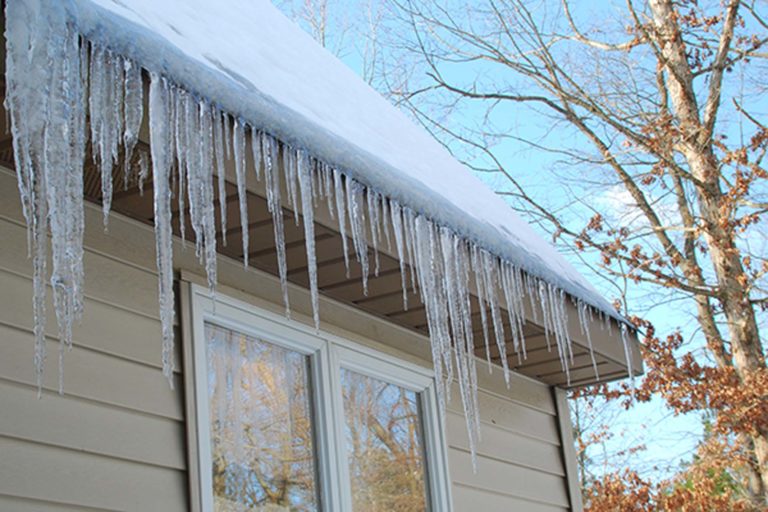
Ice dams are one of the most common Winnipeg symptoms tied to thaw cycles. When snow melts on warmer parts of the roof, water flows downward and refreezes along cold edges of the roof. Over time, ice dams build up and interfere with how a roofing system is designed to shed water.
Once ice dams form, water may back up under damaged shingles instead of draining properly off the roof. Repeated freeze thaw cycles worsen this backup, significantly increasing the risk of roof leaks. By properly repairing issues quickly, you can prevent ice dams from turning into a disaster for your home’s ceilings.
Why Winnipeg Roofs Experience More Freeze–Thaw Stress
A freeze thaw cycle is especially hard on a local roof for three reasons:
- Extreme Shifts: Winnipeg experiences cold snaps and extreme shifts where the sun warms the roof, followed by a plunge in temperature. This makes thaw cycles more frequent.
- Long Winter Duration: The longer heavy snow stays on a roof, the more often the cycle repeats. Small minor issues quickly become major problems.
- Heat Loss: If a roof’s temperature consistent levels are off due to vents gaps, snow snow melts in patches. Improving insulation and proper airflow can deters ice and potentially saving you from related repair bills.
What Helps Protect a Roof from Freeze–Thaw Damage?
While you can’t stop the winter weather, you can potentially minimize damage by ensuring your roof is maintained. Taking the DIY route for removing snow can be dangerous; it is often better to manage snow using a roof rake with proper equipment.
However, the best way to adequately protect your home is to have your roof inspected regularly by a roofing professional. They can identify minor issues, detect related roofing problems, and ensure your roofing materials are ready for the next freeze thaw cycle.
Note: Properly repairing issues quickly is the difference between a small fix and costly repairs down the road.
FAQ:
What is a freeze thaw cycle and why does it damage a roof?
A freeze thaw cycle happens when melting snow turns to water and then freezes again as temperatures drop. This creates pressure that can damage the roof deck and roofing materials.
Do freeze thaw cycles cause ice dams?
Yes. When snow melts and refreezes at the roof edges, it forms ice dams that cause roof leaks.
When should I call a roofing professional?
If you notice missing shingles, visible damage, or water stains on your home’s ceilings, you are likely requiring roof repairs. A roofing contractor can help identify issues before they become expensive roof repairs.
Protect Your Home from Winter Damage
Don’t let roof freeze thaw cycles result in permanent roof damage. From vulnerable roof edges to hidden leaks, we identify freeze thaw cycle damage before it becomes an expensive fix.
Contact a roofing professional today to secure your home before the next cold snap.