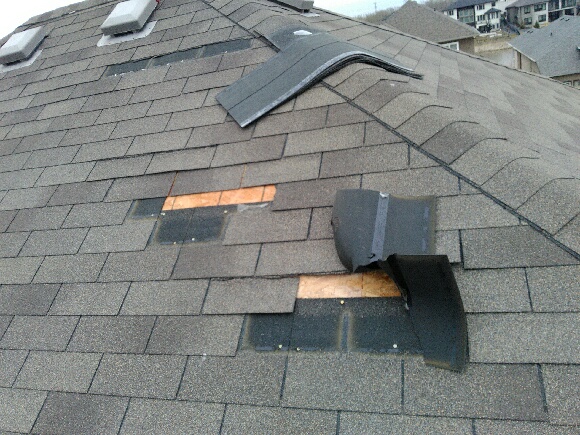
High winds in Winnipeg can be intense enough to lift shingles, expose underlayment, and even cause water infiltration if left untreated. Shingle blow-offs are one of the most common forms of wind damage we see, especially on older asphalt shingle roofs. The good news? Most cases can be repaired quickly when addressed early.
This guide explains why roof shingles blow off, how to spot potential roof damage, what a professional inspection includes, and how to prevent future issues through proper installation and long-term protection.
What Causes Shingles to Blow Off?
1. High Winds & Wind Uplift
Winnipeg’s strong winds and sudden gusts can break the adhesive bond on shingles. Once the seal is compromised, wind forces can lift or remove shingles completely. Even a single lifted shingle exposes your home to water damage, trapped moisture, and roof leaks.
2. Improper Installation
A major cause of misaligned shingles, nail placement issues, or shingles installed incorrectly:
- Nails placed too high
- Not enough nails
- Nails not driven flush
- Shingles installed in temperatures too cold to seal
Poor installation increases the risk of blown off shingles dramatically.
3. Aging Asphalt Shingles
Older roof shingles become brittle, lose granules and can no longer resist strong winds or flying debris. Aging roofs also have weaker seals, making shingle blow-offs more common.
4. Exposed Underlayment
If shingles lift, the underlayment can become exposed to wind forces and moisture. When the underlayment tears or loosens, the next windstorm can remove more shingles.
5. Poor Ventilation & Trapped Moisture
Improper ventilation can cause:
- Heat buildup
- Moisture cycling
- Premature deterioration
This makes shingles more vulnerable during strong gusts or storms.
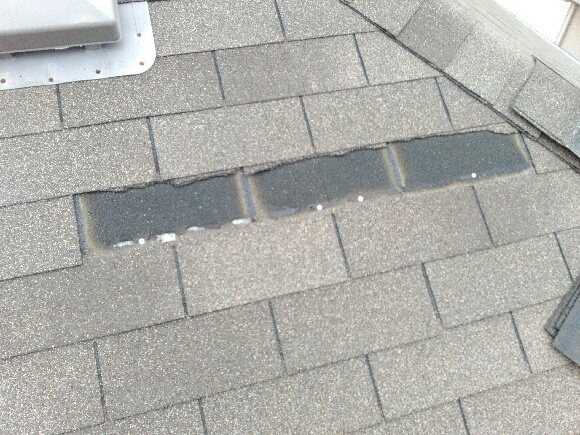
How to Identify Missing or Damaged Shingles
You don’t need to climb on your roof to spot early warning signs.
Look for:
- Missing shingles on the ground or in the yard
- Exposed underlayment or decking
- Lifted, curled, or misaligned shingles
- Debris buildup in gutters
- Dark spots indicating water infiltration
- Peeling sealant around a flashing or gaping chimney
- Moisture or staining in the attic
These are all potential signs the roof needs attention.
Is It an Emergency? When to Call Immediately
If you notice any of the following, treat it as urgent roof damage:
- Active water leaks
- Large sections of asphalt shingles missing
- Exposed wood decking
- Shingles flapping in high winds
- Damage near chimneys, vents, or soffit vents
Early repairs reduce the risk of costly repairs later.
Common Homeowner Mistakes
To avoid making things worse, never:
- Nail shingles back down yourself
- Apply caulking as a “quick fix”
- Ignore “just one or two” roof missing shingles
- Leave exposed underlayment unaddressed
- Wait until next season
A professional roofer should verify installation techniques, assess blow-off patterns, and recommend proper ventilation.
How Above All Repairs Shingle Blow-Offs
We follow proven installation techniques and repair processes that meet manufacturer warranties and address Manitoba’s extreme weather.
1. Professional Inspection
Our team examines:
- Nail placement
- Shingle condition
- Roof ventilation
- Underlayment exposure
- Valley and ridge-line stress points
This ensures the repair isn’t just cosmetic — it solves the root cause.
2. Correcting Improper Installation
We refasten misaligned shingles, replace missing ones, repair damaged underlayment, and ensure the new shingles are installed correctly for improved wind resistance.
3. Preventing Future Wind Damage
We reinforce the surrounding area to protect against future wind uplift or strong winds.
If multiple sections show wear, we may recommend a larger repair or timely replacement depending on roof age, damage level, and shingle type.
How to Prevent Future Shingle Blow-Offs
1. Invest in High-Quality Roofing Materials
Better materials = better protection. Modern shingles have significantly higher wind ratings and better adhesion.
2. Ensure Proper Ventilation
Proper ventilation prevents heat pressure and trapped moisture, both of which weaken composite and asphalt shingles.
3. Add Protective Features
For long-term protection, consider:
- Metal roofing upgrades on vulnerable areas
- Reinforced underlayment
- Open metal valleys
- Ice & water shield membranes
4. Regular Inspections
Scheduling regular inspections after storms or in fall/spring helps catch minor issues before they become major roof damage.
Why Blow-Offs Happen More Often in Winnipeg
Winnipeg homes are uniquely exposed to:
- Rapid freeze–thaw cycles
- Strong gusts across flat prairie terrain
- Heavy snow loads
- Ice dams
- Aging housing stock with mixed construction eras
These factors increase the likelihood of shingle blow-offs, missing shingles, and roof leaks.
When a New Roof May Be Needed
If you’re experiencing repeated blow-offs or widespread wear, a new roof may offer better long-term protection. Signs it may be time:
- Multiple areas of roof damage
- Cracked or curling shingles
- Frequent leaks
- Shingles consistently loosening in storms
- Underlayment repeatedly exposed
During a consultation. we’ll review all options, including roof shingles, metal roofing upgrades, and manufacturer warranties.
Why Homeowners Choose Above All
- Over 21 years in business
- 90% in-house staff
- 7-year roofing workmanship warranty
- Fast response for blown off shingles & emergency repairs
- Proven installation methods designed for Winnipeg weather
Need Help With Missing or Damaged Shingles?
Whether it’s a single blown-off shingle or widespread wind damage, we’re here to help.
Request a Free Roofing Estimate
Or use our Damage & Repair Form for urgent issues like active leaks or exposed underlayment.